
Formula 1 is weighing near-term tweaks to its 2026 energy-management regulations that could tackle safety and sporting concerns while creating fresh drawbacks, with a crunch meeting on Monday set to decide whether anything changes immediately for the Miami Grand Prix.
Talks among stakeholders are continuing this week after technical representative meetings earlier in April. CEOs and team principals will sit down with the FIA and F1 on Monday to evaluate what, if anything, should be implemented when the season resumes at the start of May.
With major overhauls to the 2026 rules package off the table, attention has turned to how the battery is charged and how the MGU-K can be used. The goals are to protect qualifying from extreme energy-harvesting tactics and to reduce the sharp closing-speed differences that arise when cars are in very different battery states.

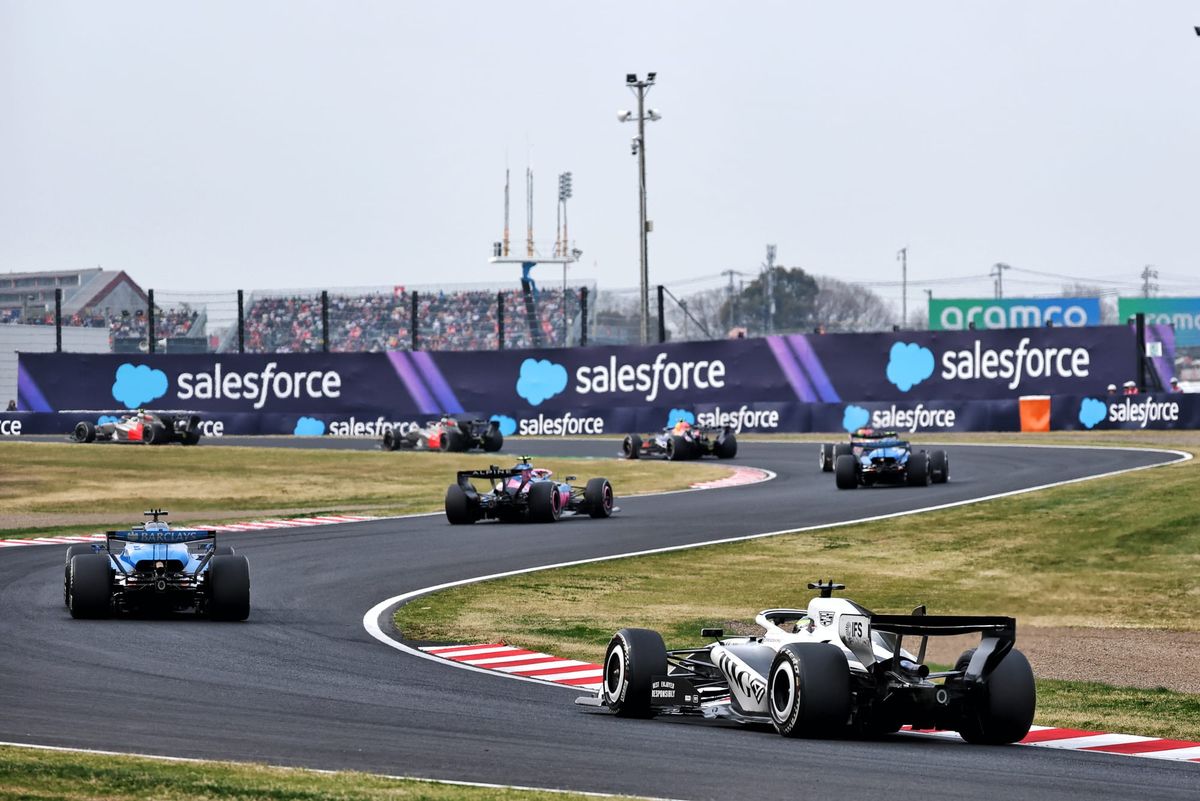
Concerns about those speed deltas were sharpened by a heavy crash for Ollie Bearman at the last race in Japan, when he went off after getting caught out behind Franco Colapinto.
Grand Prix Drivers' Association director George Russell, who is second behind Mercedes team-mate Kimi Antonelli in the championship, argued there is "a lot of low-hanging fruit" in the regulations. One proposal on the table would allow the MGU-K to act as a generator at up to 350kW during so-called super clipping, up from the current 250kW cap.
"The minus-350kW super clip is a no-brainer, and that already in itself is going to avoid a lot of lift-and-coast," Russell said.
"And there's other small parts of the regulation that say you can only derate the engine at a certain rate [by 50kW per second from 350kW to 0kW].

"So on a very short straight, there isn't enough time to go from 350kW to a super clip, because the straight is too short [to complete the staggered rampdown then engage the MGU-K in reverse].
"Some small changes around these regulations will have a major improvement for the overall driving experience.
"This break's offered a good opportunity for everyone to go around that loop. The FIA have been in a lot of comms with a handful of drivers, and that has been collective.
"And at least from the FIA technical standpoint, it's probably the closest relationship we've had with them in numerous years. So that's very positive to see."
Super clipping involves switching off the MGU-K and then running it in reverse against the engine to replenish the battery while the driver remains at full throttle. The result is the odd sight and sound of cars decelerating in the final phase of a straight, with speed traces peaking earlier than expected and then tailing off.
Raising the super clip ceiling would not cure that behaviour, though advocates argue it would reduce the need for lift-and-coast. Another change under consideration is to reduce the total amount of energy that can be harvested over a qualifying lap.
However, even Russell acknowledged "there will be a compromise somewhere, because right now the cars are set up to produce the fastest laptimes possible".
Because F1 is energy-limited, the pursuit is to charge and discharge the battery as much as the rules allow and then deploy that energy for lap time. If harvesting is curtailed, teams will lean less on aggressive tactics but will also have fewer opportunities to access peak electrical power, meaning more of the lap without deployment and potentially slower overall times.
"Reducing the amount you recover reduces the amount that you deploy," said Haas head of car engineering, Hoagy Nidd.
"And what it means is that you can recover a greater proportion of what you need to do whilst under braking conditions or under part-throttle conditions on corner exit - normal, grip-limited areas of the circuit.
"That means that if you achieve your energy target under more normal driving conditions, you don't need to start altering your behaviour in order to make the final megajoule of energy. So you don't need to start having lift-and-coasts, you don't need to start using super clip, you don't need to have the drivers holding part-throttle on exit of corners to avoid deploying in one place and putting it somewhere else.
"It's something that, in a way, is kind of introducing more of a problem to fix another problem, and maybe not ideal, but it's probably where we are with this current hardware across the whole grid."
That likely points to more conventional clipping rather than the super clip. Clipping has been part of the hybrid era for years, but it was previously less prominent and more often a symptom to manage than a deliberate, baked-in technique.
What to watch next: Monday's meeting will determine whether any of these tweaks are adopted immediately for Miami, with particular focus on the MGU-K generator cap and any qualifying-harvest limits. The next race will show whether F1 has balanced safety, spectacle and performance—or simply traded one problem for another.
---
*Originally published on [News Formula One](https://newsformula.one/article/2026-f1-energy-rules-mgu-k-fix-may-spark-new-problems). Visit for full coverage.*