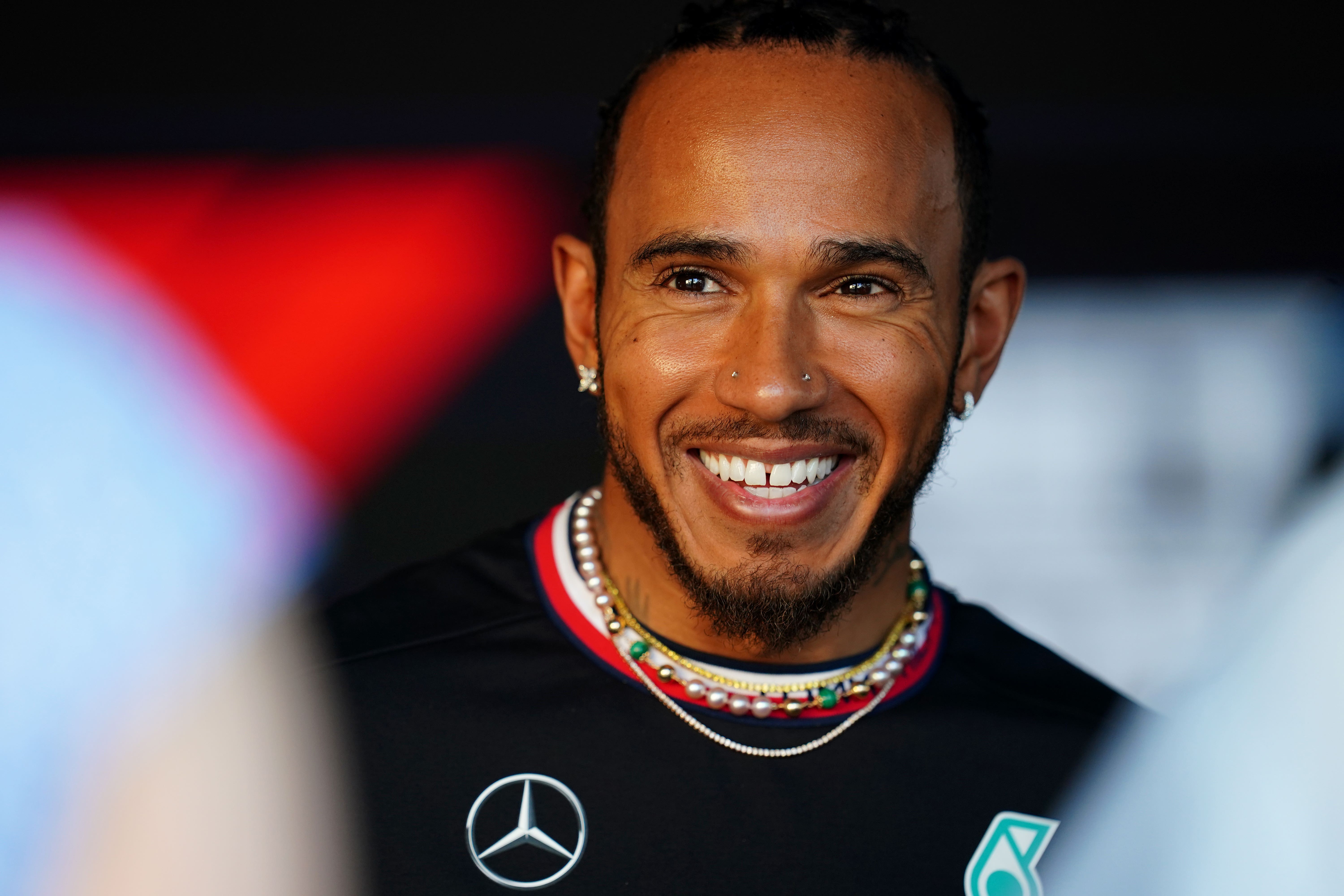
Lewis Hamilton's first win for Ferrari in Barcelona was credited to a revitalised drive, a three-stop strategy and a visible aerodynamic upgrade. But the detail that may matter most to the rest of the grid was bolted to all four corners of the SF-26 and barely visible: a new set of wheel rims.
Rims were a standardised, spec part under the previous regulations. For 2026 they are open again, and that has quietly reopened one of Formula 1's most technical battlegrounds — tyre temperature management.
"There was more to Ferrari's victory in Barcelona than meets the eye," The Race's technical team noted, describing "a fascinating hidden war that has emerged in Formula 1." Ferrari's earlier-season weakness had been obvious: the car could find pace, but it overheated its tyres across a stint. At Barcelona — hot, abrasive and brutal on rear tyres — it matched Mercedes "almost to the tenth," and the new rims were a big reason why.
Pirelli has watched the trend spread across the field. "It's quite a significant variation," the company's F1 chief engineer Simone Berra told reporters including Crash.net. "What we have seen this year is that generally stabilised conditions are much lower than in the past, and this is because the rim basically is cooling the whole wheel, and the tyres themselves."
The spread between teams is now stark. "Some teams are stabilising quite high with temperature and pressure. Some other teams are stabilising very low," Berra said. "There are completely different approaches, and this can have a big impact. The teams that have worked to cool down the tyres a lot with the rims have quite a lot more benefit than some other teams."
The figures Berra has cited put it in context. With the old standard rims, tyre pressure would climb 2 to 3 psi between the starting and stabilised running — a swing of 20 to 30 degrees. With this year's bespoke rims, some teams have pulled that down to barely 1 psi, equivalent to 10 to 15 degrees. In a sport where slipping outside the tyre's operating window triggers a vicious circle of sliding and overheating, that margin can decide a race.
According to Crash.net, Ferrari's solution centred on new BBS Japan rims that improved the thermal efficiency of the tyre — an update that did not appear on the FIA's official list of submitted parts. The effect on track was hard to miss. Hamilton ran an aggressive three-stopper, lapped up to two and a half seconds faster than George Russell at points, and won by almost 20 seconds. Russell, on a two-stop, admitted he struggled on the hard tyre.
Hamilton framed it as the direction he had pushed Ferrari toward. "The team have really listened and really worked hard to add performance and be innovative," he said. "This year is all about innovation. We came out with the bit on the rear exhaust. We came out with, what else was it, the rear wing, the Macarena. This is what I was asking for last year. It was like, this team has to be the leaders in that, and they've shown that they can and they will."
This is not an unlimited arms race. Rims must be one of two magnesium alloys, are homologated, and both the designs and the physical parts must be cleared by Pirelli before use — so teams cannot turn up with a different rim for every circuit. Even so, the gains are universal, and the field is moving. The Race reports Red Bull could follow as early as the Austrian Grand Prix.
The FIA is watching. For now there is no cause for alarm, but the governing body is expected to take a deeper look for 2027 — potentially with fresh restrictions or set design areas where modification is banned. As Read Motorsport framed it, Hamilton's win already looked like the moment Ferrari's season changed shape; the hidden rim war may be where the team found a route its rivals cannot afford to ignore.
---
*Originally published on [Newsformula One](https://newsformula.one/article/inside-f1s-hidden-wheel-rim-war-behind-hamiltons-win). Visit for full coverage.*