Mercedes are winning Grands Prix. They are also, according to one of the sharpest racing brains in the paddock, becoming too cautious to win them on track — and the effect is already visible at race starts and in early-corner wheel-to-wheel combat.
Jolyon Palmer, the former F1 driver turned race-analyst, used his breakdown of the Japanese Grand Prix to call out what he described as a structural caution inside the Mercedes team in 2026.
"The Ferrari and the McLarens are both really aggressive with the Mercedes all the time because they know in wheel-to-wheel battle the Mercedes have to be that little bit more cautious," Palmer said. "They're clearly playing for the championship already. Maybe the Ferraris, the McLarens will be, but right now it seems a long shot."
The logic is straightforward. Mercedes are on two wins from three, have Kimi Antonelli in genuine title contention in his first full season and are 45 points clear of Ferrari in the constructors' standings. A first-lap tangle or a careless move that ends a race in the barrier costs them disproportionately. Ferrari and McLaren, chasing from behind, can take bigger risks because the upside on any given Sunday is larger than the long-run cost.
Palmer's problem is that Mercedes' caution has now begun to cost the team positions at a circuit level. He singled out George Russell for a specific critique of his race-start and first-corner behaviour in Japan.
"George is quite cautious. He's quite tentative fighting with the rivals in these early corners," Palmer said. "Warm-up's not great for them. And Lando simply releases the brakes and sweeps right around the outside of George to take third place away from him."
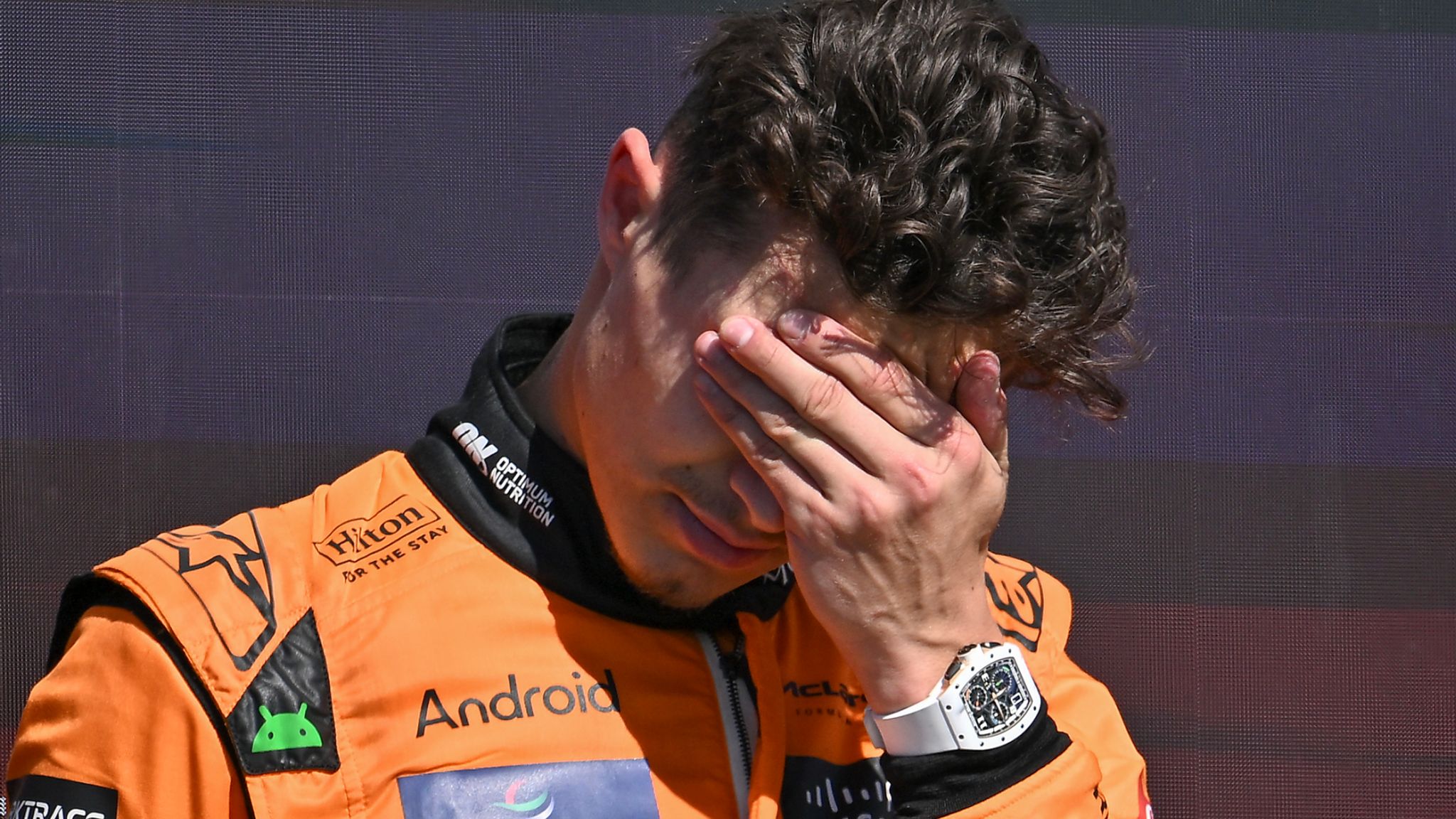
The reference point is the McLaren of Lando Norris calmly going around the outside of Russell without needing to use a defined move to do it. Palmer's framing was that Russell's reluctance to use the width of the car in combat let Norris make the overtake look routine. It is a small moment in the context of a race, but for a driver trying to establish himself as a lead Mercedes threat in 2026, ceding early positions to the championship-of-chasers teams matters cumulatively.
The Palmer analysis places Mercedes in an interesting strategic position. Antonelli's pole-to-win execution in Japan was partly salvaged by the 18-year-old rookie's raw pace, and Russell's third place became his first podium on a weekend where the pre-race picture favoured more. A Mercedes that cannot defend aggressively in the opening laps because it cannot afford a crash risks leaving points on the road even when the package is quickest.
Ferrari and McLaren, by contrast, are free to spend aggression. McLaren have a fast car and no championship to protect. Ferrari arrive at Miami with Fred Vasseur publicly declaring a new championship begins, a revised package validated at Monza and the Macarena rear wing promising straight-line gains. Both teams know wheel-to-wheel combat is where the Mercedes caution is most exposed.
What Palmer was careful not to say is that this is a problem only Mercedes can solve. The team has won every race this season precisely because, in race trim, its pace is better than its rivals'. If Mercedes continue to lead, Palmer's analysis is background noise. If Ferrari and McLaren catch up — and Miami is where the catch-up package is most likely to land — then Russell's tentativeness and the broader caution Palmer identified becomes a weakness worth probing.
For now the championship reads two Mercedes wins from three, Antonelli two from three, and Russell on a solitary podium in Japan. The race Palmer described is not the one unfolding on television. It is the one unfolding in the first two corners every weekend, where the fastest car on the grid is systematically choosing not to be the most aggressive one. That becomes the story the moment Ferrari and McLaren close the gap.
---
*Originally published on [Formula One News](https://newsformula.one/article/palmer-mercedes-championship-caution-russell-tentative-suzuka-analysis-2026). Visit for full coverage.*